
Stanislav Sergeevich Kovalev
- Home
- Involved in repression
- Stanislav Sergeevich Kovalev
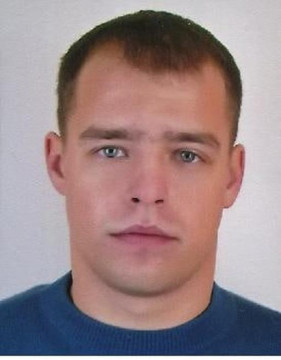
Stanislav Sergeevich Kovalev
An accomplice to crimes against the rights and freedoms of Belarusian citizens. Stanislav Sergeyevich Kovalev is a law enforcement officer involved in politically motivated repression.
Guilty of using violence and creating inappropriate conditions for political prisoners at Penal Colony No. 4 in Gomel. For a long time, he served as the colony's deputy warden for security and operational work. In August 2024, he became the warden of Penal Colony No. 4 and received the rank of colonel.
He exerted psychological pressure on women convicted for political reasons. He ordered the colony's operational staff to isolate, deny medical care, and cruelly treat political prisoners. He was involved in filing reports of violations on trumped-up grounds, with the aim of sending them to solitary confinement or depriving them of food parcels. He made monthly decisions on sending political prisoners to solitary confinement, including Veronika Kazak, Yulia Yurgelevich, Nastya Kukhta, Natalya Matveyeva, Nasta Loyko, Natalya Dulina, Maria Kolesnikova, Lyudmila Chekina, Olga Radionova, 70-year-old Irina Merkhel, and many others. He also ordered human rights activist Nasta Loyko to be sent to a punishment cell for the maximum sentence (after six months).
An accomplice to crimes against the rights and freedoms of Belarusian citizens. Stanislav Sergeyevich Kovalev is a law enforcement officer involved in politically motivated repression.
Guilty of using violence and creating inappropriate conditions for political prisoners at Penal Colony No. 4 in Gomel. For a long time, he served as the colony's deputy warden for security and operational work. In August 2024, he became the warden of Penal Colony No. 4 and received the rank of colonel.
He exerted psychological pressure on women convicted for political reasons. He ordered the colony's operational staff to isolate, deny medical care, and cruelly treat political prisoners. He was involved in filing reports of violations on trumped-up grounds, with the aim of sending them to solitary confinement or depriving them of food parcels. He made monthly decisions on sending political prisoners to solitary confinement, including Veronika Kazak, Yulia Yurgelevich, Nastya Kukhta, Natalya Matveyeva, Nasta Loyko, Natalya Dulina, Maria Kolesnikova, Lyudmila Chekina, Olga Radionova, 70-year-old Irina Merkhel, and many others. He also ordered human rights activist Nasta Loyko to be sent to a punishment cell for the maximum sentence (after six months).
List of repressed
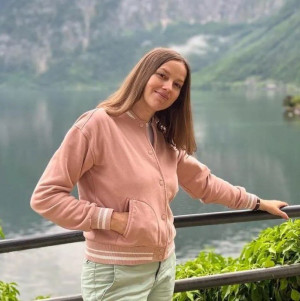
Alla was detained during a "solidarity raid" in late January 2024 on charges of supporting political prisoners and their families. That fall, she was convicted of a number of criminal offenses, including "assisting extremist activity" and "active participation in group actions that grossly violate public order," and sentenced to imprisonment in a penal colony.
On December 13, 2025, she was released following a visit to Minsk by US President Donald Trump's special representative, John Cole, and taken to Ukraine.
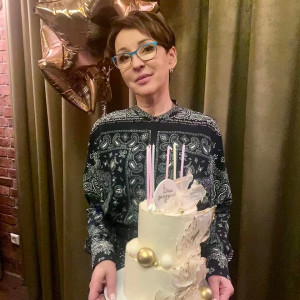
Alla was detained during a "solidarity raid" in late January 2024 on charges of supporting political prisoners and their families. That fall, she was convicted of "assisting extremist activity" and sentenced to imprisonment in a penal colony.
On December 13, 2025, she was released following a visit to Minsk by US President Donald Trump's special representative, John Cole, and taken to Ukraine.

- Associations
- Associations
Elena, a nurse at the Republican Scientific and Practical Center for Children's Oncology, Hematology, and Immunology, was arrested and convicted of "assisting extremist activity" and sentenced to imprisonment.
On December 13, 2025, she was released following a visit to Minsk by US President Donald Trump's special representative, John Cole, and taken to Ukraine.
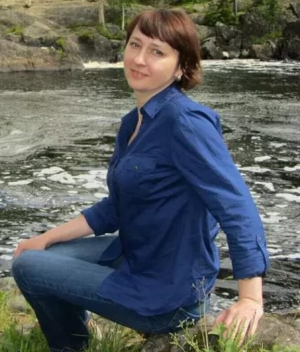
Elena Toporkova is 54 years old. She graduated from the Belarusian State Polytechnical Academy (now BNTU).
Elena was likely detained during a raid on those in solidarity with political prisoners that took place at the end of January 2024.
People caught in the raid on those in solidarity with political prisoners, which took place from January 23 to 24, say that the number of those who were subject to criminal cases may be much higher than human rights activists know. Completely non-public people simply made transfers or sent parcels to political prisoners from their own funds.
On March 19, 2026, she was pardoned after another visit to Minsk by US President Donald Trump's special representative, John Cole (among a group of 235 prisoners left in Belarus).
She was detained for assisting political prisoners on January 23, 2024, after which Elena was released, but was detained again in April of the same year and placed in a pre-trial detention center.
On March 19, 2026, he was pardoned after another visit to Minsk by US President Donald Trump's special representative, John Cole (among a group of 235 prisoners left in Belarus).
- Associations
- Retirees
- IT staff
- Associations
- Retirees
- IT staff
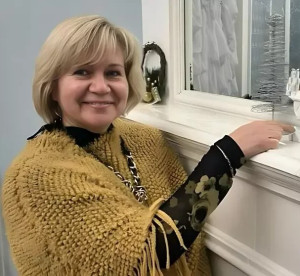
Natalia was detained during a "solidarity raid" in late January 2024 on charges of supporting political prisoners and their families. That fall, she was convicted of "assisting extremist activity" and "active participation in group actions that grossly violate public order" and sentenced to imprisonment in a penal colony.
It is known that before her arrest, Natalia worked for Solbeg. After the war began, the company relocated a significant portion of its employees abroad, but Natalia remained in Belarus.
On December 13, 2025, she was released following a visit to Minsk by US President Donald Trump's special representative, John Cole, and taken to Ukraine.
- Associations
- Entrepreneurs
- Associations
- Entrepreneurs
Elena, a sole proprietor, was detained and charged with "inciting ethnic hatred" and "cynical treatment of the victims of the terrorist attack." In late March, she wrote on a Telegram channel: "In Russia, they only see the victims in Crocus City, and they don't see the victims of Russia's bombing of Ukraine."
Gomel Prosecutor Vladislav Zhurakovsky mentioned her case, stating that a criminal case had been opened against her "under the extremism statute" for "insulting the Russian people" on "opposition Ukrainian internet resources." She was also convicted of "assisting extremist activity."
It also became known that Elena's health had deteriorated in the pretrial detention center. She was placed on bed rest, which allowed her to lie on the bed for several hours a day. She frequently visited doctors, and was sometimes prescribed injections.
In September 2025 , she was released, having fully served her sentence.
- Associations
- Retirees
- Associations
- Retirees
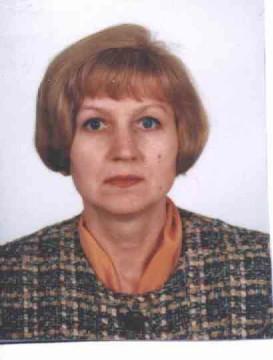
Natalia Zhigar's case is allegedly related to her support for people held in pretrial detention. Before retirement, she worked in the Brest Court office.
Before the trial, the woman was under house arrest.
The case was heard in the Grodno Regional Court. It was initially sent back for revision .
Judge Valery Romanovsky began hearing Natalia's case on August 19, 2024, and hearings continued on September 20, 24, and 30.
On December 27, 2024, the Supreme Court heard Natalia's appeal.
On March 19, 2026, she was pardoned after another visit to Minsk by US President Donald Trump's special representative, John Cole (among a group of 235 prisoners left in Belarus).
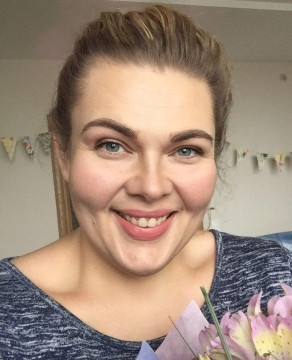
Yanina was convicted in a criminal case opened under articles for “participation in an extremist group,” “inciting hatred and discord,” and “calls for sanctions.” According to the KGB, she was associated with the Telegram channel “Trielit,” which was added to the list of “extremist groups” in January 2024.
She was released under a pardon in December 2024.
Angela and her husband were found guilty in August 2024 in a criminal case opened under the article "organizing and preparing actions that grossly violate public order, or active participation in them." The verdict in the case is unknown.
On November 27, 2024, another court hearing was held on the charge of "organizing and preparing actions that grossly violate public order, or active participation in them," following which Angela was sentenced to imprisonment in a penal colony.
According to human rights activists, she was released in the winter of 2026, having fully served her sentence imposed by the court.
- Associations
- Service sector
- Associations
- Service sector
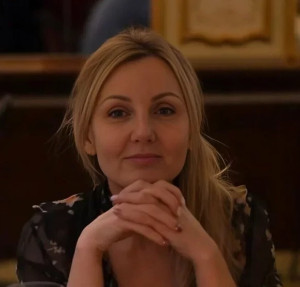
Alesya was detained for providing financial assistance to political prisoners.
In 1992, she graduated from the Belarusian State Medical University with a degree in General Medicine. She initially worked as a physician in various hospitals, and in 2003, she completed additional training as a pediatrician. In 2006, she completed additional training as a dermatologist and cosmetologist. She holds the first qualification category. In recent cities, she has worked at the private medical centers "Sedmoe Nebo," "Mark Aesthetic," and "Medovenu."
On March 19, 2026, she was pardoned after another visit to Minsk by US President Donald Trump's special representative, John Cole (among a group of 235 prisoners left in Belarus).
- Associations
- Parents of minors
- Associations
- Parents of minors
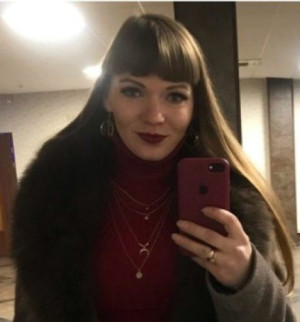
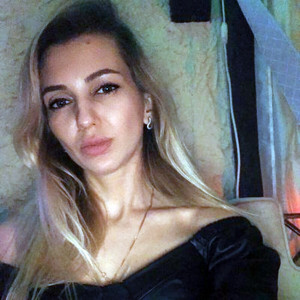
Elena, a mother of many children, was detained in the spring of 2024. She was initially convicted in an administrative case for “disobeying a lawful order or demand of an official,” but later a criminal case was opened, in which she was convicted of “participating in group actions that grossly violate public order.”
She was released in November 2024 as part of a pardon.
- Associations
- Parents of minors
- Associations
- Parents of minors
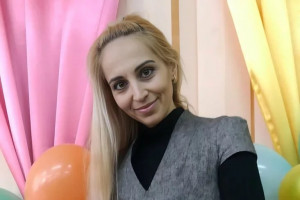
Lyudmila Deineko is 40 years old. She graduated from Polotsk State University in 2005 with a degree in law. She initially worked in the Minsk Regional Executive Committee's Department of Internal Affairs, then in the Minsk City Executive Committee's Department of Justice, and as a consultant at the Zavodskoy District Court in Minsk.
The trial begins on July 22. Deineko is accused of "calling for sanctions," "insulting Lukashenko," and "inciting hostility or discord."
Lyudmila has two minor children.
On March 19, 2026, she was pardoned after another visit to Minsk by US President Donald Trump's special representative, John Cole (among a group of 235 prisoners left in Belarus).